

About This Service Category
Anxiety & Threat Responses Hypnosis
Anxiety and threat responses are fast, automatic reactions designed to protect us. When these responses become overactive or misapplied, they can interfere with focus, confidence, sleep, and daily functioning. Work in this category focuses on retraining how the nervous system responds to perceived threat, allowing for steadier, more proportionate reactions in real-world situations.
Want Help With Anxiety or Stress Responses?
See if we have a hypnotist near you. In-person availability varies by region and may change as practitioners become available.
Focus Areas in this category
Common Anxiety & Threat-Response Challenges
Anxiety-related patterns often persist even when someone understands that a situation is not objectively dangerous. This category includes challenges where the issue is not logic or insight, but an automatic threat response that activates too easily or too often.

Generalized Anxiety & Persistent Worry
Work focused on reducing background anxiety and ongoing mental tension that remains present without a clear external trigger. The goal is improved baseline calm and steadier emotional regulation.

Panic Responses & Sudden Surges
Targeted work for abrupt spikes of fear or physiological activation that appear without warning. Sessions focus on reducing intensity and restoring a sense of control when these responses arise.

Social Anxiety & Evaluation Sensitivity
Support for anxiety triggered by social interaction, performance, or perceived judgment. The work addresses learned threat associations rather than personality traits or confidence “skills.”
In some cases, social anxiety overlaps with confidence-related work.

Anticipatory Stress & Hypervigilance
Work addressing ongoing alertness, scanning, or difficulty relaxing, even in safe environments. Common examples include constant mental readiness, startle responses, or difficulty disengaging.

Phobias & Specific Fear Responses
Targeted hypnosis approaches for learned fear responses tied to specific objects, situations, or environments. The focus is on separating the trigger from the automatic fear reaction.
Some phobic responses overlap with habit-based patterns.

Sleep Disruption Related to Anxiety
Support for sleep difficulties driven by mental activation, nighttime alertness, or difficulty disengaging. This work focuses on threat-response patterns rather than medical sleep disorders.
Sleep-related anxiety may also overlap with emotional regulation workk.

These examples represent common focus areas within anxiety and threat-response work. They are not a complete list, and suitability is determined during an initial strategy call.
Applied Session Flow
How Hypnosis Is Used for Anxiety & Threat Responses
Anxiety-related responses operate quickly and automatically, often activating before conscious reasoning can intervene. Rather than attempting to “think away” these reactions, hypnosis allows focused work with the learned response itself.
1.
Identify the Pattern
We clarify what situations trigger the response and how it shows up physically, mentally, and behaviorally in daily life.
2.
Define the Desired Response
We define what a calmer, more functional response looks like in practical terms, keeping the work specific and observable rather than abstract.
3.
Change the Automatic Reaction
The perceived threat is separated from the old fear response and paired with a new, steadier reaction that allows the situation to occur without triggering excessive alarm.
4.
Test and Stabilize
The new response is checked against the situations that previously triggered anxiety, helping it remain reliable across everyday contexts rather than only during sessions.
Common Experiences
What Clients Often Notice
Clients working on anxiety and threat responses often describe gradual but meaningful shifts in how their system reacts to pressure or uncertainty. Changes tend to show up as increased steadiness rather than dramatic emotional swings.

Reduced Intensity of Anxiety Responses
Fear or tension may arise with less intensity, making it easier to stay present and functional.

Faster Recovery After Stress
Clients often notice they return to baseline more quickly after stressful events rather than remaining activated for long periods.

Increased Sense of Safety and Control
Situations that once felt overwhelming may begin to feel manageable and predictable.

Less Anticipatory Stress
Many clients report less mental rehearsal of negative outcomes and reduced background vigilance.
How We Practice Therapeutic Hypnosis
In-Person vs Virtual
Sunshine State Hypnosis offers both in-person and virtual therapeutic hypnosis sessions, guided by the same professional standards. The choice of format is based on client needs, practitioner judgment, and the nature of the work being done
In-Person Sessions
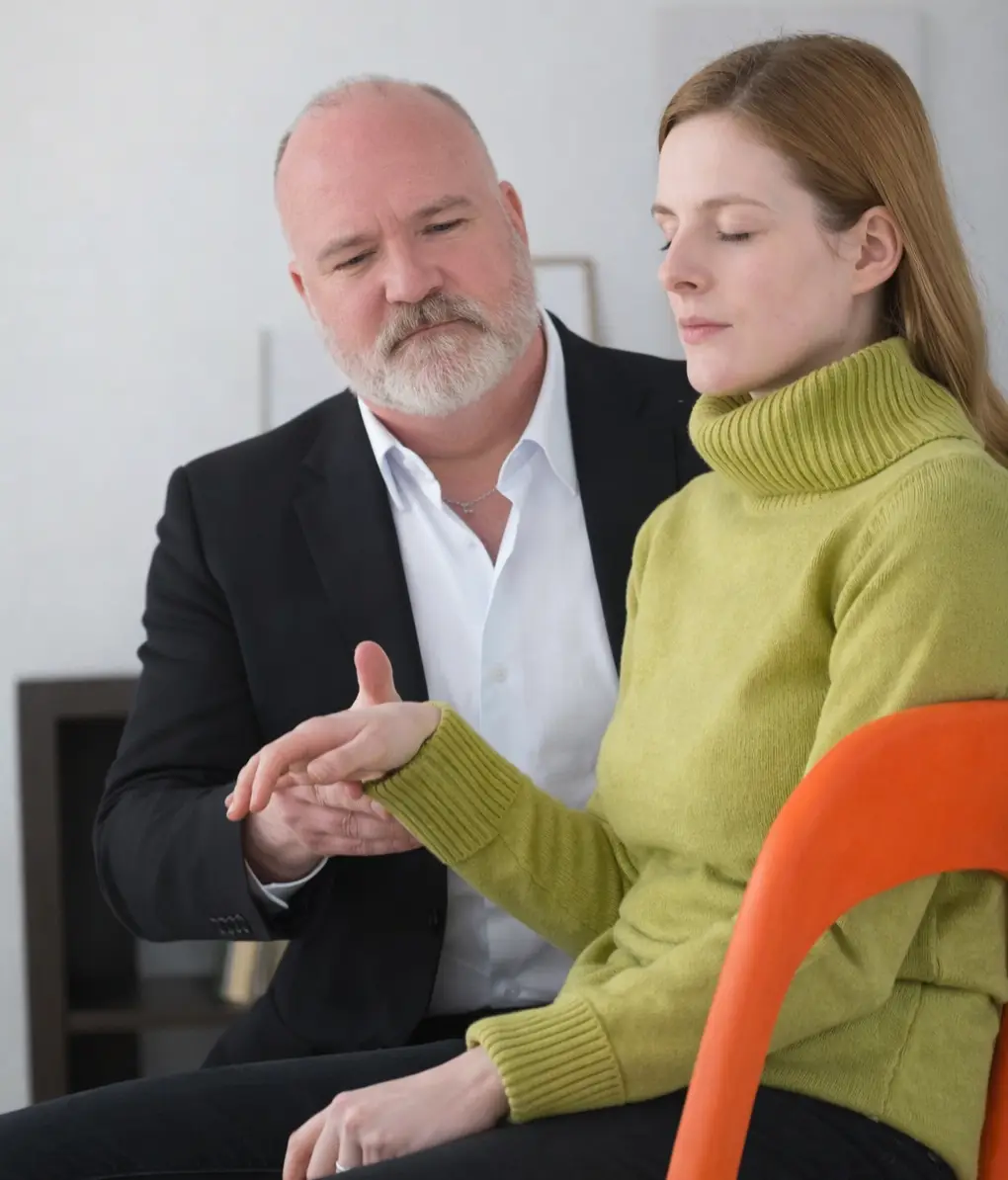
in-person sessions allow for the highest level of calibration and responsiveness. Working together in the same physical space makes it possible to observe subtle changes in posture, breathing, and attention, and to adjust the session moment by moment as those responses shift. Many clients prefer in-person work when addressing deeply ingrained habits, instinctive reactions, or complex patterns, where immediacy and direct interaction can add depth and precision to the process.
Virtual Sessions
Virtual hypnosis sessions offer a flexible and effective option for many goals, particularly when focus, habit change, or structured guidance is the primary need. Sessions are conducted live and one on one, with the same clarity of intent and professional standards applied throughout. Virtual sessions are available statewide and can be a practical choice for clients who prefer convenience or do not have access to a nearby location.
"“The effectiveness of the work comes from attention and calibration, not the format in which it’s delivered."
Harry Pierce, CHT
Scope of Services
What You Can Expect From Hypnosis
Sunshine State Hypnosis provides therapeutic hypnosis focused on symptom management, habit change, and the reduction of unwanted responses. The work is practical and goal-directed, helping clients respond differently to specific situations rather than addressing underlying medical or mental health conditions.
Hypnosis services are not a substitute for medical, psychological, or psychiatric care and are offered within appropriate professional scope.
Client Sessions Conducted
Years of Applied Practice*